
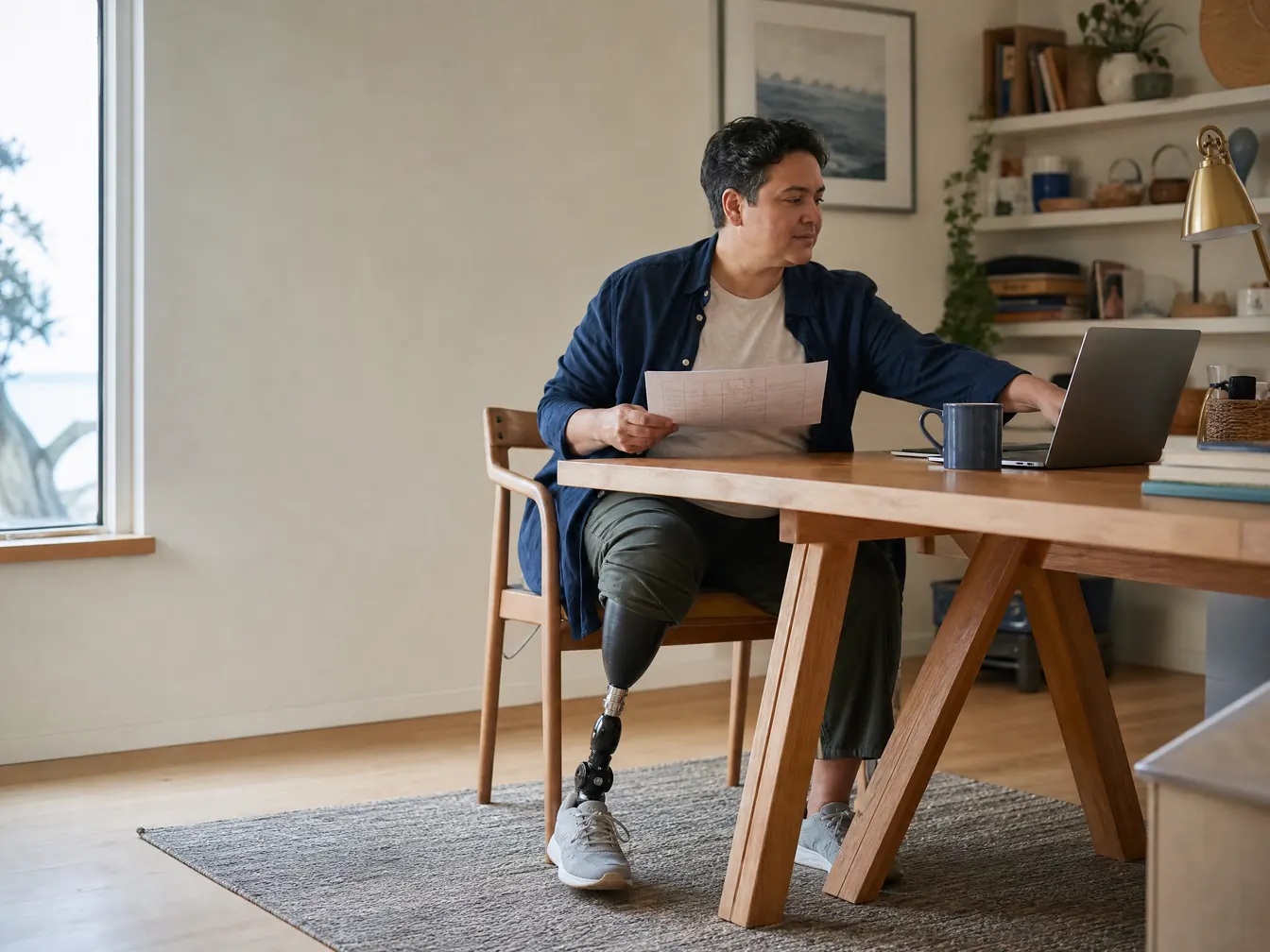
Everyday detail is care information
The work of getting through a real day belongs in the conversation, not only the medical chart.
A task, place, or time of day can be the detail that makes a care plan more useful in practice.
Subject context
Participation is a real clinical detail
A device or support plan becomes more useful when the care team understands the actual setting: a work shift, commute, kitchen task, caregiving role, hobby, uneven surface, weather, footwear, or public space.
The same component or adaptation can feel different across environments. Naming the task, what makes it difficult, and what success would look like gives clinicians and rehabilitation professionals a practical problem to work on.
Participation is the subject
The subject before the questions.
Start here for the core ideas behind this guide. The question list comes later, after the subject has been given room to make sense.
Describe the task
A work shift, commute, kitchen task, hobby, caregiving role, or uneven surface can show what support would be useful.
Environment changes the answer
The same device or adaptation may feel different across home, work, transportation, weather, footwear, and community settings.
Planning is collaborative
Therapy, clinicians, employers, rehabilitation specialists, and the person doing the task may each hold part of the solution.
Make the task visible
A little more context before you decide what to ask.
A useful participation description includes what happens before, during, and after a task: the surface, pace, tools, breaks, transportation, footwear, fatigue, safety concern, and what success would look like. Those details help a team consider device changes, therapy, environment, or workplace accommodation together.
01
Home and routine tasks
Tasks such as showering, stairs, cooking, moving around the home, and getting in and out of a car may need to be relearned or adapted while strength, balance, healing, and confidence develop.
An occupational or physical therapist may help a person think through a task, the environment around it, and temporary equipment or routines that can make it safer or more manageable. These supports can be part of an adjustment period, not a statement about what a person cannot do.
02
Driving is an individual return
Whether and when someone returns to driving can depend on healing, the limb involved, reaction time, local requirements, and whether adaptive equipment is considered. There is no single milestone that applies to everyone.
Ask a qualified care professional whether a driver-rehabilitation evaluation or discussion of adaptations is appropriate for your situation.
03
Returning to work may be gradual
Timing can depend on the physical demands of the role, healing, commute, fatigue, and how a device or orthosis performs in real work conditions. A phased return, modified schedule, or temporary duty adjustment may be worth discussing rather than assuming the choice is all or nothing.
Talk directly with the relevant members of your care team and workplace about the tasks that are essential, difficult, or likely to change over the course of a day.
04
Ask for practical support
Workplace rights and responsibilities vary by location, employer, and job. In the United States, the Job Accommodation Network is one well-known source of general information about accommodation ideas and workplace conversations.
For legal or employment advice about your own situation, use a qualified local adviser or the official resources that apply to you.
Terms
A few words that make the rest easier
Occupational therapy
Rehabilitation support focused on daily activities, routines, and participation.
Phased return
A gradual return to work or another role that may begin with modified hours or duties.
Adaptive equipment
Equipment intended to help a person complete a task in a safer or more accessible way.
Driver rehabilitation
A specialized assessment and training approach that may address driving after an injury, illness, or physical change.
FAQ
Questions people often ask
Sources & resources
Continue with care.
These sources offer general planning and accommodation information. Workplace rights, benefits, and decisions depend on the individual situation and jurisdiction.
Amputation Accommodation and Compliance Series
A U.S. Department of Labor-funded resource with questions and accommodation ideas for employees and employers; it is not legal or medical advice.
Job Accommodation NetworkPatient educationNational Limb Loss Resource Center
A public hub for expert-reviewed education, peer support, healthcare navigation, and information specialists.
Amputee CoalitionA print-ready tool for naming job tasks, questions, and follow-up steps before a work or accommodation conversation.
Continue with context