
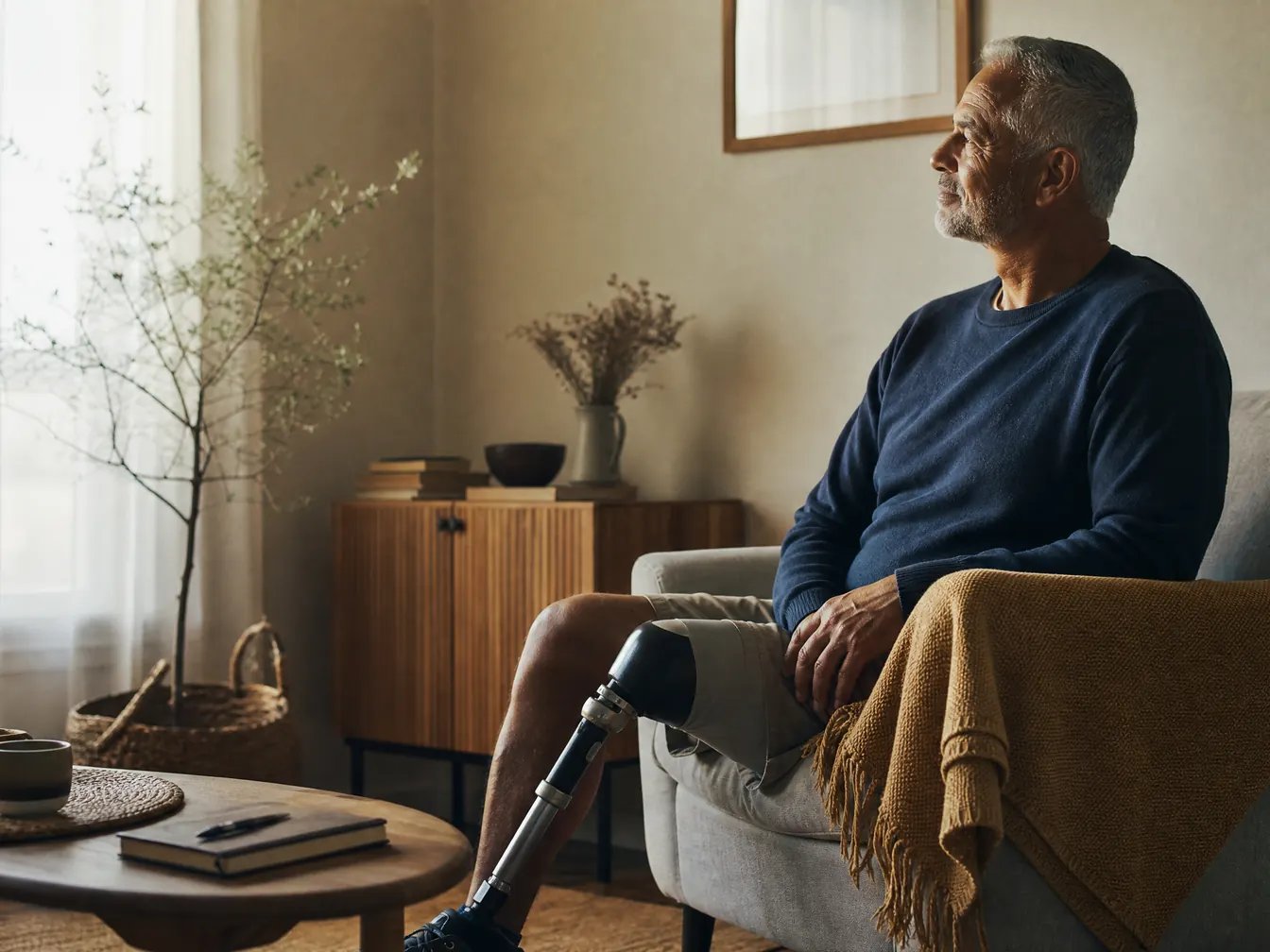
Notice what is different
A simple baseline can make a change easier to describe and a care conversation easier to begin.
This guide offers general context for everyday observation, cleaning, and fit changes. It is not a replacement for personal clinical advice.
Subject context
Skin is part of the device conversation
The residual limb and the device interact through pressure, movement, heat, moisture, and changing volume. A familiar daily baseline can make it easier to notice when something is different and describe the change accurately.
Cleaning, drying, liner care, wear schedules, and responses to skin changes depend on the person and the care plan. General information cannot replace instructions from a qualified clinician who can assess the skin and fit directly.
The daily baseline
The subject before the questions.
Start here for the core ideas behind this guide. The question list comes later, after the subject has been given room to make sense.
Observe
A familiar baseline makes it easier to describe a change in skin, swelling, comfort, sensation, or fit.
Clean and dry
Cleaning and drying instructions depend on the person, skin, liner, socket, and care plan; follow the guidance given by a qualified clinician.
Respond early
A persistent or concerning change is worth bringing to the care team rather than silently working around it.
The skin and the system
A little more context before you decide what to ask.
Heat, moisture, pressure, movement, liner materials, socket contact, and changes in limb volume can affect the skin and the experience of a device. Care instructions vary, so a persistent or concerning change should return to a qualified clinician rather than be managed through repeated self-adjustment.
01
Why this matters
The skin on a residual limb may spend hours in contact with a socket, liner, or suspension system. That can change how pressure, friction, heat, and moisture affect it. A routine is not about looking for trouble; it is about becoming familiar with what is usual for your own body.
If something changes, a specific description (where it is, when it began, what it looks or feels like, and whether it relates to device use) gives a prosthetist or other qualified clinician a clearer place to start.
02
A simple daily check
Many people make a brief visual check part of the routine after taking a device off. Use a mirror or ask for help with areas that are difficult to see. Notice anything different from your usual baseline, such as redness, a scrape, a blister, unusual dryness, or a change in texture.
The purpose is not self-diagnosis. It is to notice a change early enough to ask a useful question before it becomes harder to manage.
03
What to bring up sooner
A qualified care team can tell you what is expected for your particular limb, device, and stage of recovery. In general, a pressure mark that is sharply localized, does not fade, or repeatedly returns to the same area is worth reporting. Broken skin, a blister, new pain, unusual warmth, swelling, or odor also deserve timely clinical attention.
If you are unsure whether a change can wait for a scheduled visit, contact the team that manages your rehabilitation or prosthetic care for guidance.
04
Cleaning and moisture
Skin and liners are commonly cleaned as part of a daily routine, but materials and skin needs differ. Ask your prosthetist about the right cleaning method for your liner and device components, and follow product instructions when they are available.
Thorough drying matters because trapped moisture can increase irritation. A clinician can help you think through moisturizer, sweat, skin sensitivity, or any product that changes the surface contacting a liner or socket.
05
Volume changes are part of the conversation
Residual-limb size can shift with activity, fluid balance, healing, or changes over time. Socks, liners, and fit adjustments may be used to respond to those changes. A need for adjustment is not a personal failure or proof that a prior fitting was wrong.
A sudden or significant change in fit, limb size, comfort, or skin response is useful to share with a qualified care team.
Terms
A few words that make the rest easier
Residual limb
The remaining physical portion of an arm or leg after an amputation.
Skin check
A visual look at the skin to notice changes from a person’s usual baseline.
Sock ply
The thickness of a prosthetic sock, which may be adjusted as a limb’s volume changes.
Pressure area
A specific point where contact, friction, or force may be more noticeable.
FAQ
Questions people often ask
Sources & resources
Continue with care.
This external patient-education resource is reviewed by the Amputee Coalition’s Scientific and Medical Advisory Committee. Use it as a conversation aid, not an individualized care plan.
Skin Care 101
Detailed patient education about residual-limb skin care, daily inspection, and when to contact a healthcare professional; the page describes expert peer review by the Coalition’s Scientific and Medical Advisory Committee.
Amputee CoalitionClinical referenceRehabilitation of Lower Limb Amputation (2025)
Evidence-based clinical guidance for healthcare professionals treating lower-limb amputation rehabilitation.
VA/DoD Clinical Practice GuidelinesA print-ready observation sheet for noting daily skin, comfort, fit, and care-team questions.
Continue with context