
Support begins with context
A brace or support makes more sense when you understand the movement, footwear, and daily routine around it.
Use this guide to turn a device label into practical questions about purpose, fit, skin, and the way you actually move through the day.
Subject context
Support is shaped around movement
An orthosis is an external support for a body part that is present. It may guide movement, protect an area, change alignment, or reduce the work a joint or muscle has to do during a particular task.
The device does not work in isolation. Footwear, clothing, anatomy, skin tolerance, walking surface, and the way the person puts it on all affect whether the support is useful and sustainable.
What the support is doing
The subject before the questions.
Start here for the core ideas behind this guide. The question list comes later, after the subject has been given room to make sense.
Purpose
An orthosis may guide movement, protect an area, change alignment, or make a daily task more manageable.
The body around it
Fit is shaped by anatomy, footwear, clothing, movement, skin tolerance, and the way the device is used in real life.
Adjustment is expected
Small changes to padding, straps, joints, alignment, or footwear can be part of individualized fitting.
The support in real life
A little more context before you decide what to ask.
An orthosis is judged in the movement it is meant to support, not only on a fitting table. Shoes, clothing, surfaces, straps, padding, and the time a person can comfortably wear it can all reveal whether the intended support is working as planned.
01
What an orthosis is
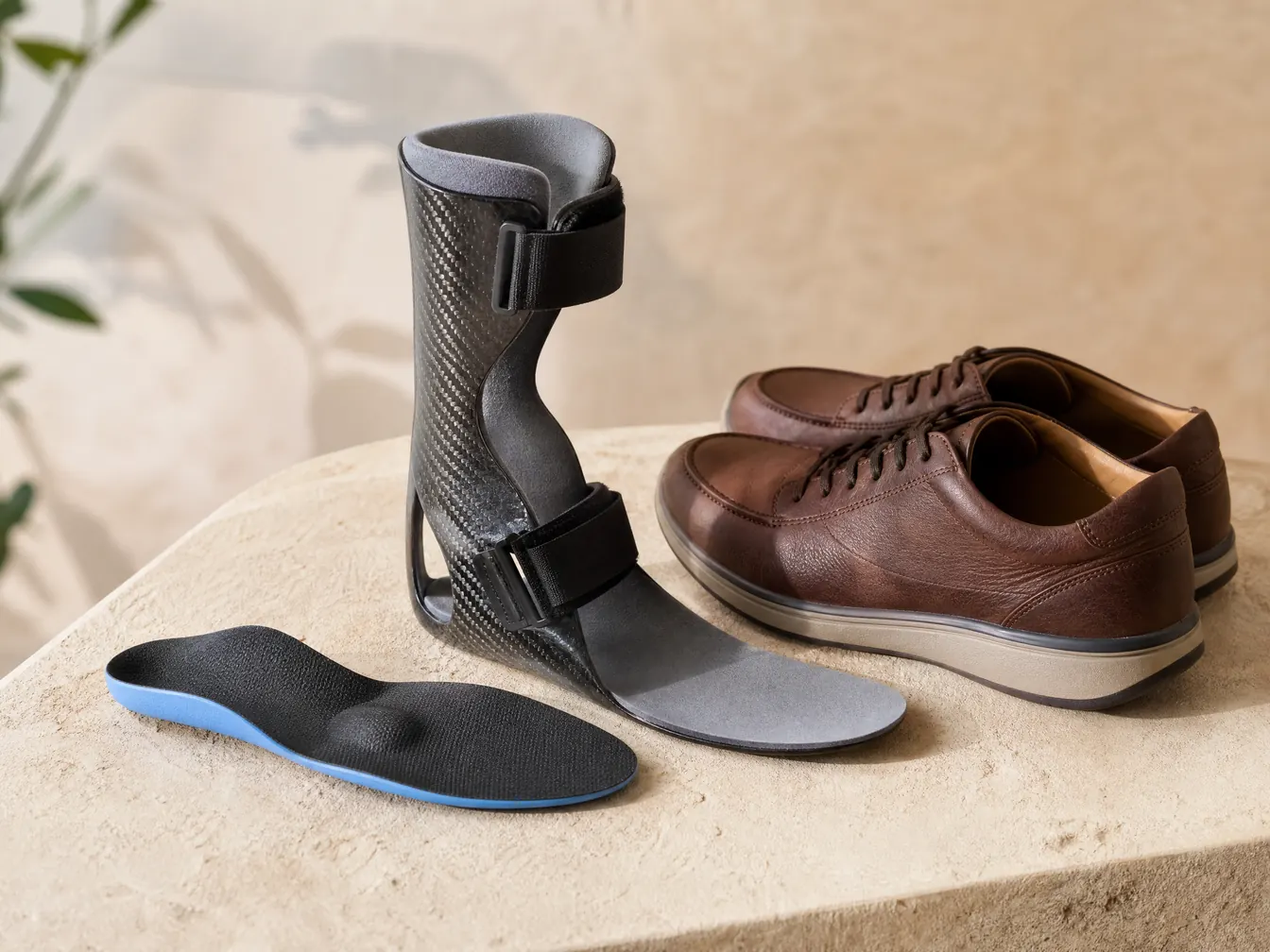
An orthosis is an external device that supports part of the body. It may be a brace, shoe insert, spinal support, ankle-foot orthosis, or another device designed around a particular functional need.
Unlike a generic support bought off a shelf, a prescribed orthosis may be measured, cast, scanned, fabricated, fitted, and adjusted to respond to a person’s anatomy, footwear, movement, and skin tolerance.
02
Common types of support
The name of an orthosis often tells you which part of the body it is designed to support.
Upper-limb orthoses
Supports for the hand, wrist, elbow, or shoulder that may position or protect a joint.
AFO
An ankle-foot orthosis that supports the ankle and lower leg and can help guide foot position while walking.
KAFO
A knee-ankle-foot orthosis that spans both joints when greater lower-limb support is needed.
Spinal orthoses
Supports designed around the cervical, thoracic, or lumbar spine.
03
From assessment to fit
The fitting process may include an examination, measurements or a scan, material selection, a trial fitting, and follow-up adjustments. Orthoses can use molded shells, padding, straps, joints, springs, or footwear modifications. The device should be considered in the context of the shoes and clothing a person actually uses.
Alignment and comfort are practical questions. Ask how the device should sit, what pressure is expected versus concerning, and how to check the skin after use.
04
Why footwear belongs in the conversation
Footwear can influence how an orthosis sits and functions. A clinician may discuss heel height, shoe depth, fastening, insole space, or a footwear modification. Bring commonly worn shoes to the appointment when the clinic asks you to do so.
05
When to ask for an adjustment
Persistent rubbing, pressure marks, a strap that no longer holds well, unexpected changes in walking, or a device that no longer fits inside usual footwear are all practical reasons to contact an orthotist. An adjustment is a normal part of individualized fit, not a failure to adapt.
Terms
A few words that make the rest easier
Orthotist
A clinician who designs, fits, and maintains braces and other orthotic supports.
Custom-molded
Made from a cast, scan, or measurements of an individual body rather than a generic size.
Biomechanical alignment
The relationship between device components and the body’s natural movement points.
Pressure relief
A design change intended to reduce force over a sensitive area.
FAQ
Questions people often ask
Sources & resources
Continue with care.
These sources explain broad orthotic and prosthetic benefit categories and professional-resource pathways. Plan and device decisions vary by person and coverage.
Prosthetics & Orthotics, Prosthetic Devices & Therapeutic Shoes
Federal information explaining Medicare benefit categories for braces, artificial limbs, and related items.
Centers for Medicare & Medicaid ServicesPatient educationNational Limb Loss Resource Center
A public hub for expert-reviewed education, peer support, healthcare navigation, and information specialists.
Amputee CoalitionContinue with context