
Before you compare devices
Start with the relationship between your body, the device, and the activities you want it to support.
A device is a system, not a single product. The sections below unpack the words that make fitting and function conversations easier to enter.
Subject context
A prosthesis is a system
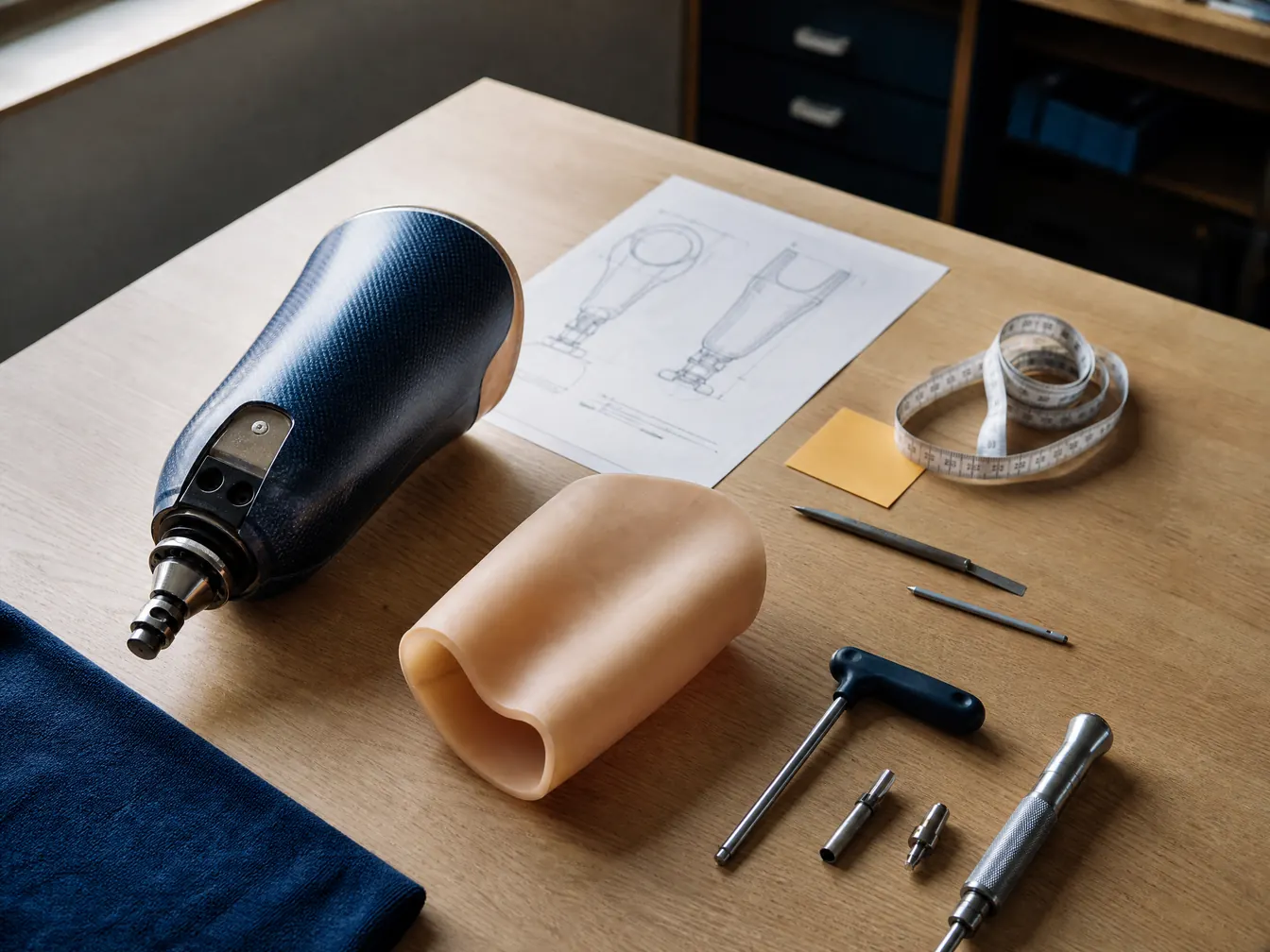
A prosthetic device brings several parts into a working relationship: the socket, interface or liner, suspension, structural components, and a terminal device or foot. The socket is the point of contact with the residual limb, so fit and skin response are central to everyday use.
Component choices are usually connected to the person’s activities, environment, alignment, maintenance needs, and goals. A device that is useful for one routine or surface may not be the right answer for another.
The system in plain terms
The subject before the questions.
Start here for the core ideas behind this guide. The question list comes later, after the subject has been given room to make sense.
The socket
The socket is the custom-made part that contacts the residual limb and helps transfer forces during movement.
Suspension
Suspension describes how the device stays attached. Security, comfort, skin response, and movement all matter together.
Function
Component choices are connected to activities, environment, alignment, maintenance, and the person’s goals, not a universal ranking.
How the parts behave together
A little more context before you decide what to ask.
Socket contact, interface materials, suspension, alignment, and component selection affect one another. A change in volume, activity, skin response, or gait can change the experience of the whole system; describing that change is more useful than trying to identify the fix alone.
01
What a prosthesis is, and what it is not
A prosthesis is an artificial device designed to replace a missing body part or to support a particular function. It is not a ready-made product selected once and forgotten. A functional device is usually developed through assessment, fabrication, fitting, training, and ongoing adjustment with a prosthetist and the rest of a care team.
The useful question is not simply which device is best. It is which configuration, fit, and support plan makes sense for your body, environment, goals, skin health, and everyday routine.
02
Where the limb difference occurs matters
Clinicians use level-of-amputation terms to describe the part of the limb that remains. These words are structural starting points; they do not define what a person can do.
Transradial
A below-elbow upper-limb difference. The natural elbow remains, while the device may support wrist and hand function.
Transhumeral
An above-elbow upper-limb difference. The device may need to include both elbow and hand function.
Transtibial
A below-knee lower-limb difference. The natural knee remains, and socket fit and foot selection are important parts of the conversation.
Transfemoral
An above-knee lower-limb difference. The device may include a knee component along with a foot and other structural parts.
03
The parts that work together
A device is an interconnected system. The socket connects to the residual limb; a liner may help manage comfort and contact; a suspension approach helps keep the device in place; and structural components connect to a foot, hand, or other terminal device.
A prosthetist can explain why each part has been selected and what change in comfort, stability, function, or maintenance it is intended to address.
04
What fit means in practice
Fit is not only whether a device can be put on. It includes how contact is distributed, whether the limb feels secure, how the skin responds, how the device behaves during movement, and whether alignment supports the activities that matter to you.
Residual limbs change in volume and shape. It is common for fit to require fine-tuning over time. Redness that does not resolve, unexpected pain, skin changes, a loose feeling, or a new change in gait are observations worth sharing early with the care team.
05
Replacement and adjustment cycles
Daily use creates normal wear, and a person’s needs can change. Liners, socks, mechanical components, sockets, and alignment may all need periodic attention. Keep notes on what you feel, when it happens, and what seems to make it better or worse. That record can make an adjustment conversation more specific.
Terms
A few words that make the rest easier
Residual limb
The remaining part of an arm or leg after amputation.
Socket
The custom-made part of a prosthesis that contacts and supports the residual limb.
Suspension
The method that helps keep a prosthesis attached, such as suction, vacuum, or a locking system.
Pistoning
Up-and-down movement of the residual limb inside the socket that can signal a fit issue.
FAQ
Questions people often ask
Sources & resources
Continue with care.
Use these sources to explore general rehabilitation and public resource pathways. Device selection and fitting remain individual clinical decisions.
Amputation System of Care: Public Resources
Public information about interdisciplinary amputation rehabilitation, prosthetic services, and patient resources.
U.S. Department of Veterans AffairsPatient educationNational Limb Loss Resource Center
A public hub for expert-reviewed education, peer support, healthcare navigation, and information specialists.
Amputee CoalitionContinue with context